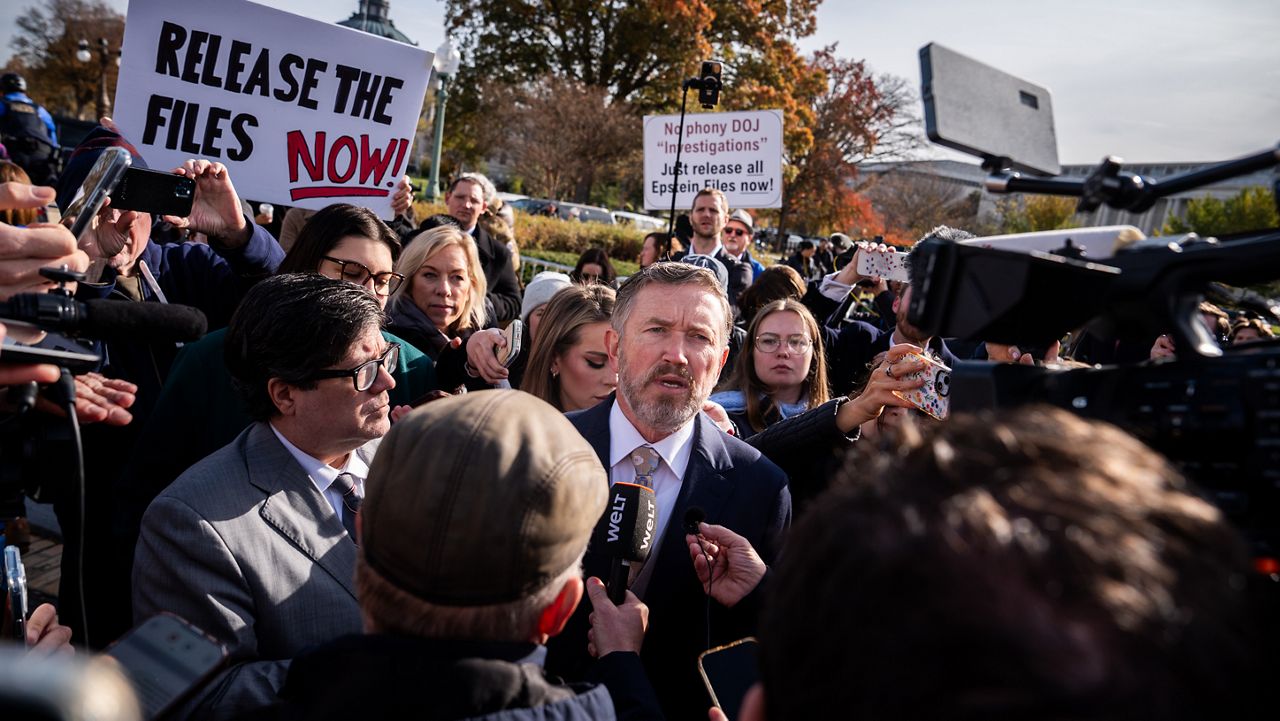
WASHINGTON — Rep. Thomas Massie’s longshot effort to force the Justice Department to release its files on sex offender Jeffrey Epstein led to the nearly unanimous passage of the bipartisan “Epstein Files Transparency Act.”
The Crescent Springs Republican and Rep. Ro Khanna, D-Calif., got it done last November with the help of a legislative maneuver called a “discharge petition,” which allows a bill to be brought to the floor over the House Speaker’s objections if enough lawmakers sign on.
Now the two have teamed up again, and Massie hopes to use the samemaneuverto get the 218 necessary signatures for the “Epstein Files Transparency Act II.”
“It’s been a year since the president signed the Epstein Files Transparency Act, and the government continues to withhold over three million files,” Massie said on the House floor Monday. “That’s why we’ve introduced the Epstein Files Transparency Act II, to bring the fight to the state courts, accountability to the Department of Justice and closure for survivors.”
The lawmakers say that themeasuregives members of Congress, state officials and survivors the right to challenge the Justice Department in court for failing to comply with the original bill.
According to Massie, it clears the way for state attorneys general to prosecute crimes by Epstein’s co-conspirators before state courts.
Asked if he plans to support Massie’s effort, Rep. Andy Barr, R-Lexington, told Spectrum News Tuesday, “I think I’ve already voted for the release of the Epstein files. I’m not interested in grandstanding. I’m interested in actually advocating for victims.”
In July, Attorney General Todd Blanche defended the DOJ’s compliance with the law, but acknowledged some mistakes were made.
As of Tuesday afternoon, Massie’s discharge petition had more than three dozen signatures.
In aninterviewon CNN’s “The Source” Monday night, Massie said he needs every Democrat and at least three other Republicans to sign on.
This time, he won’t have a signature from former Rep. Marjorie Taylor Greene, R-Ga., who left Congress in January.