The photographer Christopher Anderson was moving to Europe, going through storage, looking at old pictures—a familiar exercise when packing up apartments. But for Anderson, who’s been deployed to some of the thorniest places on earth, the snaps lining the cardboard box hit a little different.
“I've lived multiple photographic lives from my origins as a war photographer, to the pictures of my family, tothe pictures of the White House,” he recently toldVanity Fair. “Who was that person that was on a boat with Haitian immigrants in 2000, documenting that journey, who also then walks into Trump's White House and photographs Stephen Miller? I hate to use the word ‘humbling’ because it's overused, but yeah, wow—It's hard to imagine that the kid from West Texas was fortunate enough to be present in some of those moments.”
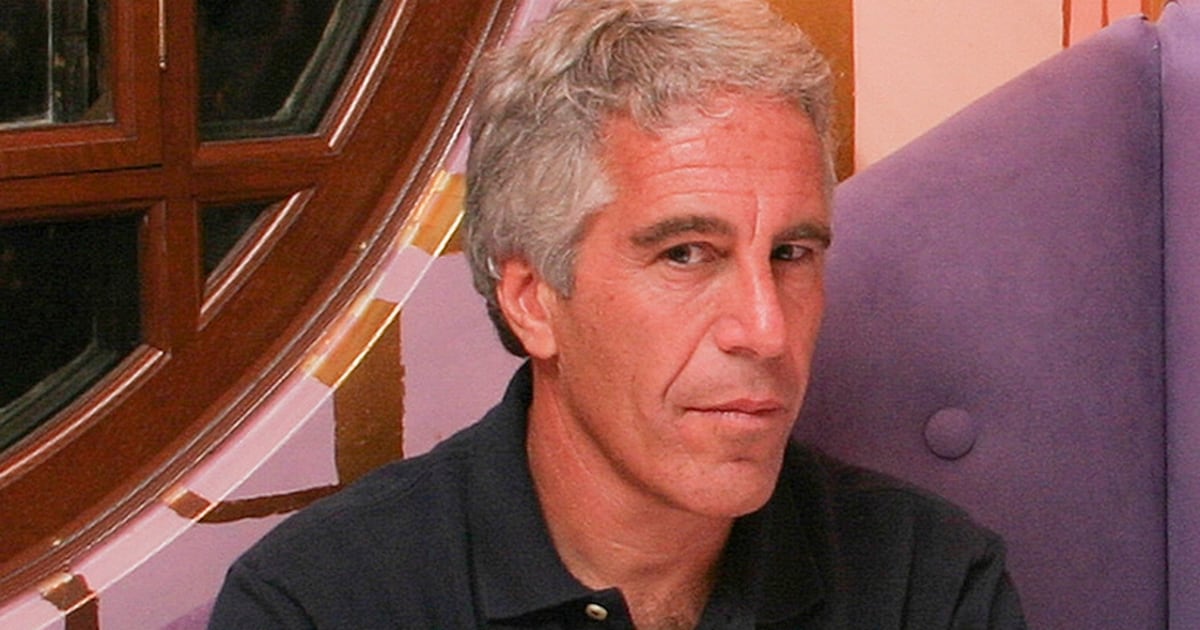
While rummaging through storage, he also found photos of Jeffrey Epstein, shot in his notorious Upper East Side townhouse, commissioned for a story that never ran. He thought he’d given the only copies to their subject under pressure from his staff. Then the files turned up. He knew they had to be out in the world. No one had ever seen these images before.
Anderson’s newly-released book,Index, reveals a monumental group of subjects that Anderson has photographed during his decades-long career. Early chapters focus on warzones. It starts in Afghanistan, he was there on September 11, 2001—therealready, astoundingly. He stayed in the region through the war on terror, and shifted focus, always finding the story: Lebanon, Gaza, Venezuela, Haiti.
Now everyone has a camera in their pocket. Back then, it was just Anderson.
“I've always had a certain sense of responsibility for being a witness,” he said. “That has changed because a lot of these pictures, when I was taking them, were pre-internet, certainly pre-social media. There were less sources of visual information coming from these places.”
He felt similar in late 2025, when he walked into the White House to photograph President Trump's cabinet for the January issue ofVanity Fair.
“I felt a pressure to find a way, in my mind, to jump the barricades of the staged-managed image, to circumnavigate the image they want to present to me, which I don't believe is an accurate image or a truthful image,” he said. “The puzzle I was trying to solve was: How do I punch through the noise they're throwing at me? And I literally thought about jumping the guardrails, to get at something that peered behind the curtain. And I think that's always my goal going into a situation like that.”
The approach was a success. His photos of Trump’s cabinet were a sensation, a standalone news story itself, scrutinized on the internet for weeks. Anderson, despite hoping to capture an elusive truth about the figures running our government,was not expecting this kind of response.
“I assumed there would besomecontroversy, even public discussion about it—I could have never imagined seeing them jump into pop culture the way they did,” he said. “I kind of didn't imagine that that could happen atallfor pictures anymore, and certainly you can't imagine your own pictures doing that.”
The whole world has now seenhis images of Susie Wiles, Karoline Levitt, Marco Rubio, and Stephen Miller. But they had not seen the images of Epstein he had made in early 2015 at 9 E. 71st Street. Those who comb through the Epstein files can find the whole backstory of the shoot, the spiking of the magazine piece, and the wrangling for the photos that Anderson ultimately sold to Epstein for $20,000. That’s a standard arrangement. What happened after wasn’t.
“Then the threats started,” he writes inIndex. “He sent his bodyguard/driver, Merwin, a massive guy in a long black overcoat and black, leather gloves, to my studio to intimidate me (it worked).”
Epstein managed to pry the photos from Anderson. But years later he found copies on an old hard drive and decided to finally publish them.
“When I was in there and I was photographing, I photographed pictures of this mantleplace, of his mantle and his fireplace, and I made the pictures of Woody Allen and Bill Clinton and whoever else, and I'm sure there were others there, including Trump—but at the time, no one cared about Donald Trump.”
The photos—stark, emotionless, quiet, haunting—are a revelation. He took such keen interest not because he sensed that this person, this townhouse, would one day be a global news story. He had always taken pictures of the moment, keenly attuned to the details. And sometimes, way later, the details become history.