Education
How a brilliant mind fell for bad history and worse people.
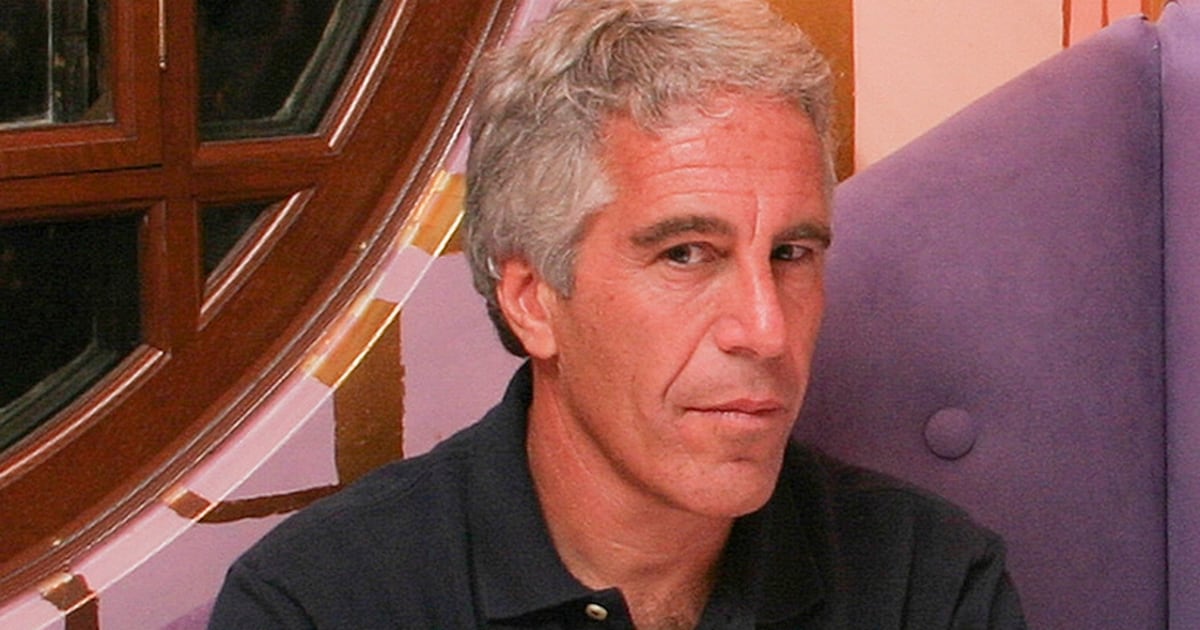
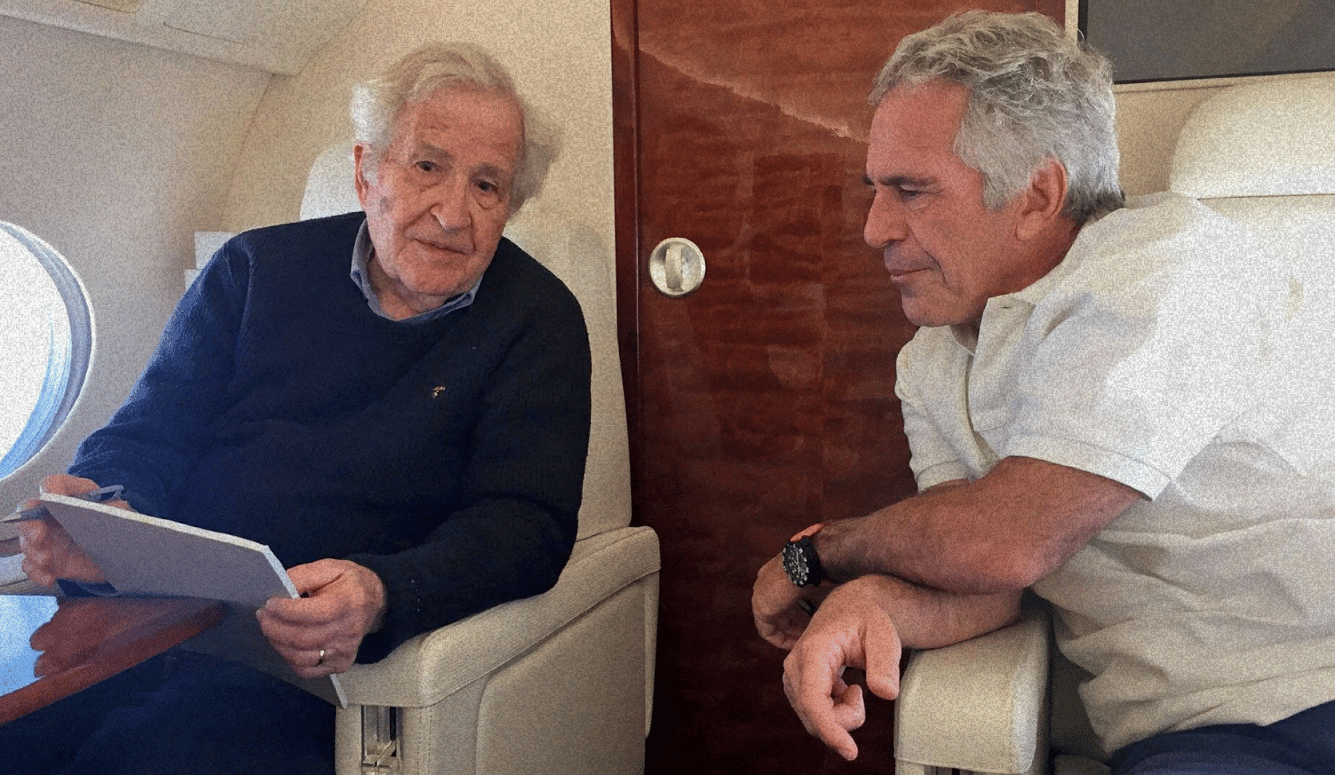
There are scandals that expose corruption, and there are scandals that expose temperament. The Chomsky–Epstein affair belongs in the second category. The fact that Jeffrey Epstein cultivated famous acquaintances is not surprising. That was his method. His talent lay in quietly and persistently attaching himself to prestige until the association began to look natural. What unsettled people was not the contact. It was the indifference.
When he wasasked to explain these meetingsby theWall Street Journalin April 2023, Chomsky replied with a characteristically blunt email: “First response is that it’s none of your business. Or anyone’s. Second is that I knew him and we met occasionally.” He seemed to believe that meeting controversial individuals is not unusual. Pressed to explain why he had attended a dinner with Epstein and Woody Allen, Chomsky replied: “I’m unaware of the principle that requires that I inform you about an evening spent with a great artist.” Intellectual life, he implied, involves encounters with all sorts of people, and since Epstein had served his time and paid his debt to society, so what?
Most people heard arrogance, and in a way, they were right. But it was a particular kind of arrogance—the confidence of a mind trained to believe that the real danger lies not in proximity to the powerful, but in accepting the narratives built around them. Chomsky has spent a lifetime distrusting the obvious story, and that instinct has made him formidable. But it has also sometimes led him into situations where the peculiar refusal to accept appearances becomes its own kind of blindness.
Chomsky’s defenders routinely praise his consistency. They say that he applies the same sceptical lens at all times and to all things. But consistency, pushed far enough, can become a habit rather than a principle.
In the late 1970s, refugees fled the Khmer Rouge regime bearing horrifying stories about what was going on in Cambodia. Some of these tales sounded unreal: emptied cities, forced labour, mass executions, and hunger on an almost incomprehensible scale. Much of the early information emerged in fragmented testimony filtered through journalists with limited access.
While the world recoiled,Chomsky hesitated. Not because he admired the regime, but because he distrusted the channel. Western media, Cold War incentives, the possibility of exaggeration—these were his stated concerns. And they were not irrational concerns. But they collided with a reality that was moving faster than his scepticism could adjust.
As evidence accumulated, the picture of Cambodia became clearer. Cities really had been emptied. Money had been abolished. Entire populations had been driven into agricultural camps. People suspected of education—sometimes merely those wearing glasses—really had been marked for liquidation. Families were split apart. Millions of people were forced to labour under conditions that blurred the line between policy and annihilation. By the time the regime collapsed, roughly two million people were dead.
At which point, the facts were no longer in dispute. But something about Chomsky’s original posture lingered—as if his argument about media distortion had acquired a life of its own, independent of the bodies it was meant to interpret. A person can begin by questioning narratives and end up resisting reality when it refuses to cooperate.
The same reflex appeared in the case of the French Holocaust denier Robert Faurisson, whomChomsky defended in print. Chomsky insisted he was defending a principle—freedom of speech—not a man. On its face, that distinction is clear enough, but distinctions have a way of collapsing when placed in the wrong context. His essay ended up as a preface to Faurisson’s work. Worse, it described Faurisson, with a kind of casual neutrality, as “a relatively apolitical liberal.”
It was the sort of phrase that makes a thoughtful reader stop, reread, and wonder if something essential has slipped—not intelligence, but proportion perhaps. Again, the instinct is recognisable: strip away hysteria, refuse moral panic, insist on principle. But there is a point at which this posture begins to float free of reality. When everything is filtered through scepticism, even the obvious starts to look negotiable.
Even a minor, almost throwaway remark Chomsky made about the Khazar theory of Ashkenazi origins carries this imprint. This idea, popularised by novelist Arthur Koestler, holds that Ashkenazi Jews descend from a Turkic kingdom on the Eurasian steppe not from the ancient Levant. This hypothesis has been examined repeatedly and found wanting, and it survives today as a historical contrarian’s delight.
But Chomsky was happy to entertain itduring a 2023 podcaston the basis that debates about DNA are irrelevant to cultural traditions that constitute ethnic identity. Faced with a settled account, he leans towards revisionism and away from consensus, even if that makes him sound cranky. Not because the revisionism is true, but because it is revisionist.
That perverse reflex runs through much of Chomsky’s work. It gives his thinking its provocative edge. But it also sometimes detaches it from reality.