%20(1).png)
What wasJeffrey Epsteinreally doing for Leon Black?
It’s a question that has circulated in finance,art, and media circles since 2020, the year after Epstein’s death, whenThe New York Timesreported that Black had given millions to the financier in the later years of his life. It’s a question that precipitated a recentdustupbetweenPuck’sWilliam Cohan, the author of a new 600-plus-page biography of Black,Money to Burn, and theTimesjournalists who broke the story, whose reporting Cohan has described as “Leon jihad.” And it’s a question that theTimes’Andrew Ross Sorkinput to Cohan right away at an event to discuss the book at92nd Street Yin Manhattan on Wednesday—though anyone who came there looking for a straight answer surely left disappointed.
“Life is complicated,” Cohan said with some smiling exasperation about 20 minutes into a winding dialogue on the subject. “Counselor…I know what he told me. I know he believes it. I know the other party to the conversations and the actions is dead, and there’s no way I can get to the bottom of that.”
The room was about three-quarters full, dotted with suits and open shirts befitting the private equity world that Black shaped as cofounder of Apollo Global Management as well as what could be called Upper East Sidecore. One woman in a popped gingham collar flipped through the print edition of theTimesas she waited for the conversation to begin. “It’s 92nd Street Y after all,” Cohan said as he described the dramatic flavor of one particularly knotty financial saga featured in the book. “I have to mention Shakespeare.”
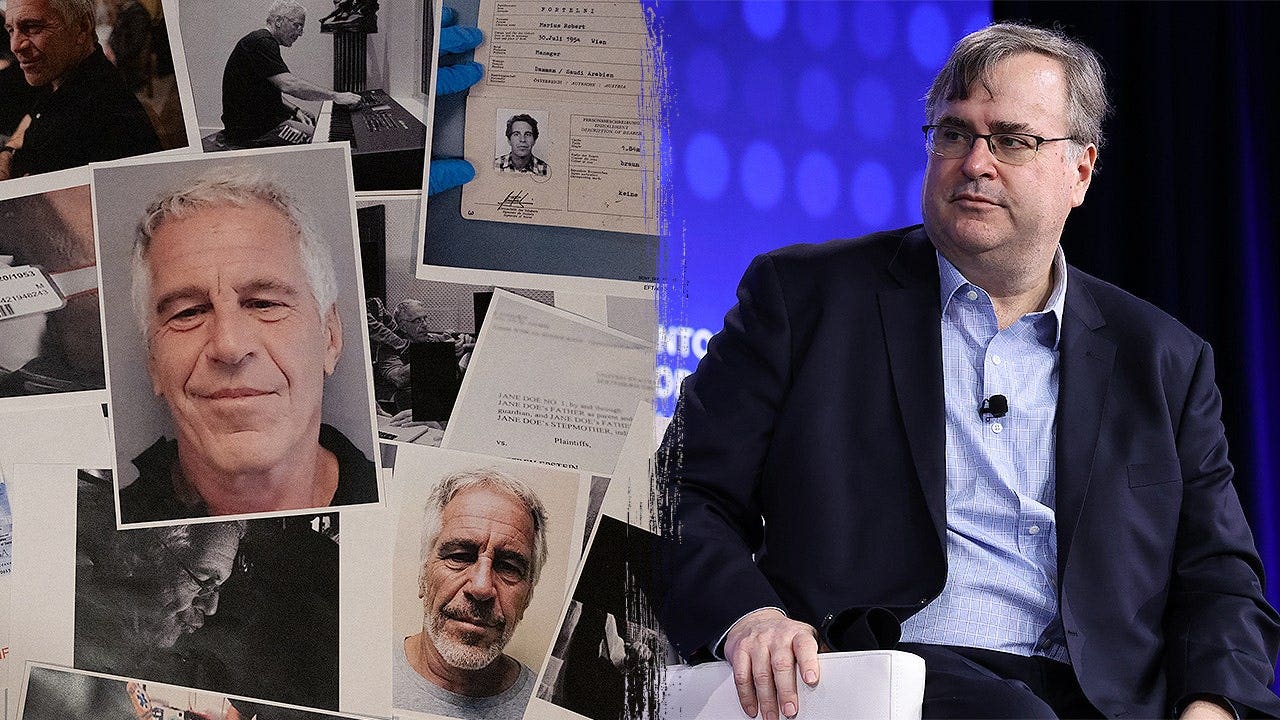
Leon Black arrives to testify at a closed-door interview with the House Oversight Committee on Capitol Hill as part of its investigation into Jeffrey Epstein.
All of which is to say that it was also a crowd with a particular interest in the life of Epstein, whose notorious town house sits about 20 blocks south of 92nd Street Y, and whose financial dealings have captivated Wall Street for the better part of a decade. “Yes, we’ll get to the Epstein of it all,” Sorkin said as he took the stage to some laughs. “We’ll go there very quickly.”
As for the “$158-million question,” as Cohan put it, Black has said that he was paying Epstein for tax advice and estate planning.Money to Burndoesn’t propose a more sinister relationship between the two men, though it acknowledges that the sum was exorbitant for such services. TheTimesreported in March that Epstein helped Black structure about $20 million in payments to a dozen women, at least some of whom had been in sexual relationships with Black. (Black’s attorneys told the paper that Black wasn’t aware that Epstein paid any women on his behalf.Semaforrecently reported that two of the story’s authors, David Enrich and Matthew Goldstein, “laid into” Cohan, who is also a formerVanity Faircontributor, when they spoke with Black’s representatives about Cohan’s depiction of their reporting inMoney to Burn, which closely dissects communications between Goldstein and one of Black’s accusers: At least three women have accused Black of sexual assault, which he has strenuously denied and which has not resulted in any charges. Cohan’s book doesn’t touch on Epstein’s involvement in the payments to women that theTimesreported, and quotes a Black spokesperson describing Goldstein’s reporting as a “smear campaign.” According toSemafor,one of theTimesreporters claimed that Cohan hadn’t given them a chance to respond to his depiction of their reporting; Cohan said he spoke to Goldstein during his reporting.)
“I still don’t know whether you believe as the author that these payments that were made to Jeffrey Epstein by Leon Black were made because, as he would say, he was provided excellent tax advice,” Sorkin said on Wednesday, “or whether you believe that he was really being paid because Jeffrey Epstein was a grand fixer for him of girls and all sorts of other shenanigans and things that we don’t know about.”
What ensued was an epistemological discussion worthy of Black’s Dartmouth philosophy thesis that Cohan cites in his book. (“That’s dark,” Cohan said when Sorkin read aloud from it: “All of life is but an accumulation of masks, and the world itself is but one large, incommunicable, mysterious, and ironical mask.”)
“We all think there’s more to it,” Cohan said of the relationship between Epstein and Black. Sorkin said he understood that, but he wanted to know what Cohan himself thought after writing over 600 pages on Black. “It’s unclear whether anybody believes [Black’s] story, but he believes it,” Cohan said. “And he told it to me on the record. What am I supposed to do? I’m just a journalist.”
“Maybe this is going to be complicated because I work forTheNew York Times,” Sorkin acknowledged, but he wanted to know about Black’s criticism of theTimes’reporting in Cohan’s book. “Guess what?” Cohan said. “He didn’t like being accused of nefarious criminal activity on the front page ofTheNew York Times.”
At his social peak, before his name was widely associated with Epstein, Black was a visible fixture of the art world.
“But it turned out to be true,” Sorkin said.
“What turned out to be true?”
“The money, the women, all of the pieces that were published.”