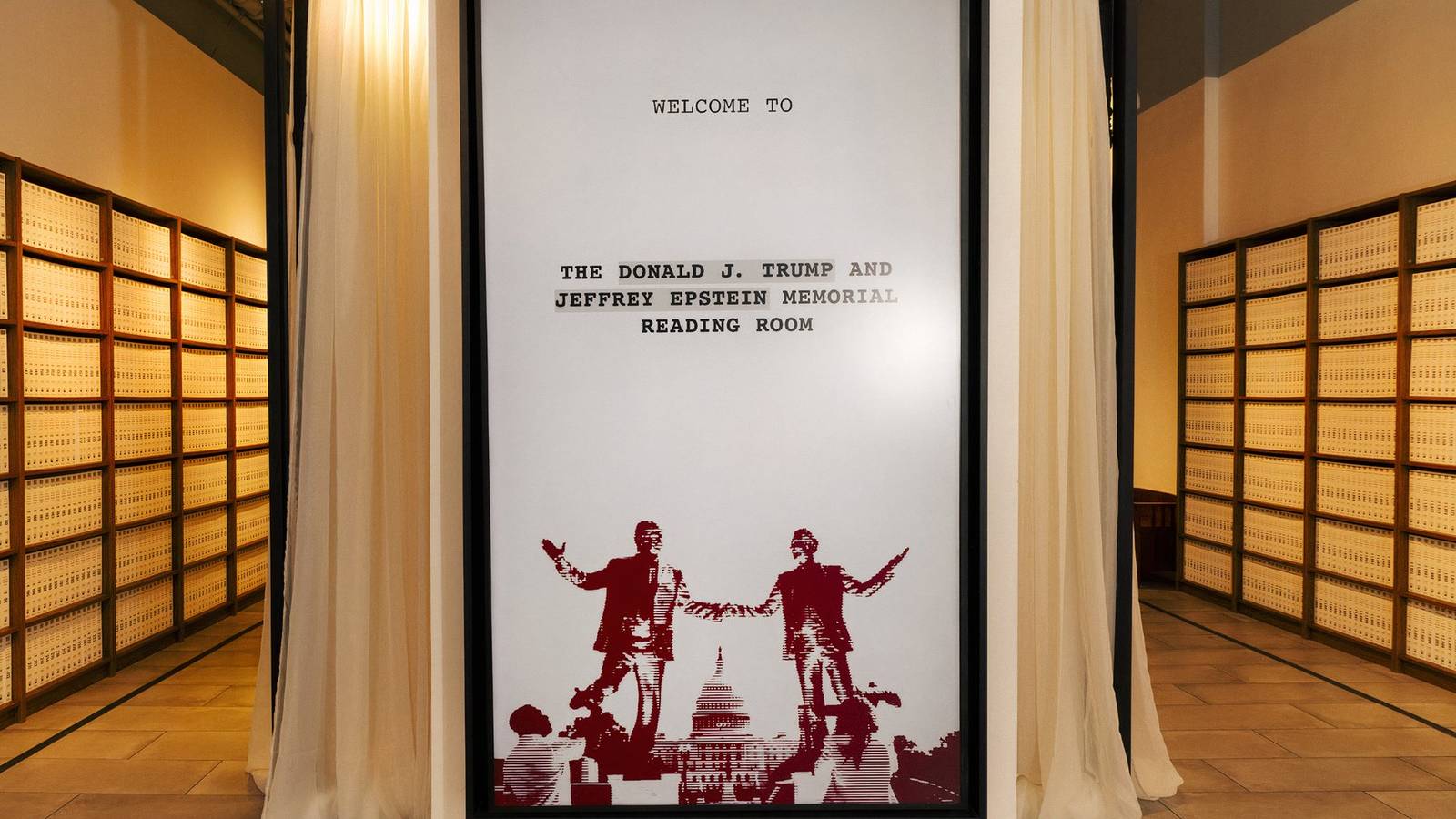
Exhibit spokesperson David Garrett told Military.com there's a "lot of evidence."
The Institute for Primary Factsjust opened the Donald J. Trumpand Jeffrey Epstein Memorial Reading Room, a library putting on public display more than 3.5 million pages of the Epstein files.
Inside the New York installation, the Epstein files are no longer just another batch of documents floating through search results, social media posts, congressional hearings and half-remembered headlines. They are printed, bound and shelved. The archive takes up physical space, which is exactly the point.
Thereading room,located in New York City’s Tribeca neighborhood, compiles the Epstein-related recordsreleased by the Department of Justiceinto thousands of individual volumes. Public reports have described the installation as containing roughly 3,437 to more than 3,700 volumes, depending on how the records are counted, with the full display weighing more than 17,000 pounds. It is open to the public by appointment from May 8 to 21.
For David Garrett, a spokesperson and lead organizer for the Institute for Primary Facts, the choice to make the documents physical was not a gimmick, but an argument.
“Printing out the Epstein files distinguishes them as real and tangible,” Garrett told Military.com.
Trump has denied wrongdoing related to Epstein, and the White House has rejected attempts to tie him to Epstein’s crimes.
For the past few years, the Epstein case has existed in a strange corner of American public life, where court records, victim testimony, tabloid obsession, political suspicion and internet speculation all collapse into the same feed. The reading room tries to slow down the digital noise.
Garrett said searching the files on a phone or computer does not convey the scale of the case, nor the crimes described in the records that continue to draw widespread attention not only domestically but worldwide.
"Searching these files digitally–on a phone or a computer–does not convey the enormity of scale of the Epstein files and the crimes contained within. 3.5 million documents is a lot of evidence. 17,000 pounds of paper, nearly 3,500 volumes of 800 pages each."
It’s striking to see the physicality of this evidence.
That physicality is what gives the installation its force, he said. Rows of white-bound volumes line the room. A timeline traces years of public records, legal proceedings, reported encounters and documented connections. At the center is a tribute to survivors and victims.
The result feels less like a traditional library, and instead forces visitors to confront volume after volume.
The Institute for Primary Facts, a nonprofit focused on civic literacy through immersive museum exhibits, said the reading room is meant to draw public attention back to the records themselves—and to the government’s handling of them.
The reading room is not being presented as a neutral display of old documents.