ByNancy Dillon
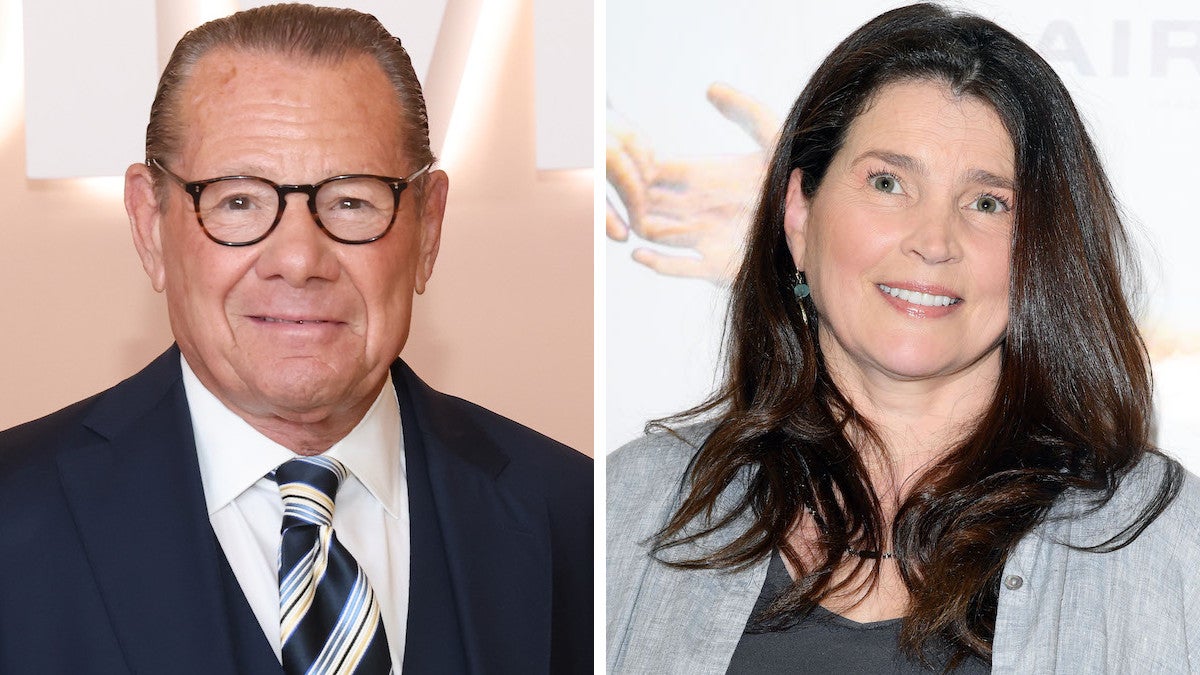
Julie K. Brown and her explosive 2018 Miami Herald series,Perversion of Justice, blew the doors off the sweetheart deal with prosecutors that concealed the full extent ofJeffrey Epstein‘s serial sex crimes. Brown doggedly tracked down 80 Epstein survivors not identified by name in court documents. Eight spoke with her. Four trusted her enough to go on the record, and on camera, shining a light for the first time on the heartbreaking human toll of the Palm Beach millionaire’s miserable world.
Brown’s work had an undeniable impact. Eight months after it was published, Epstein was arrested in New York. A few days after that, Alex Acosta, the former U.S. Attorney in Florida, resigned as labor secretary. Acosta had overseen the extraordinary agreement that allowed Epstein to plead guilty to two state-level charges of procuring a minor for prostitution and soliciting a prostitute, even though police had identified dozens of alleged victims younger than 18. Sealed by a judge, the 2007 “deal of a lifetime,”as Brown dubbed it, gave Epstein, four accomplices, and “any potential co-conspirators” immunity from all federal criminal charges.
Brown’s work went on to win many prestigious accolades, but not a Pulitzer Prize, the most competitive award in journalism. That all changed on Monday, when the committeegranted her a special citation, citing her “groundbreaking reporting in 2017 and 2018 that exposed Jeffrey Epstein’s systematic abuse of young women, the justice system that protected him, and, over time, his powerful network of associates and enablers.” In a Friday morning interview withRolling Stone, the journalist talked about why she was heartened by the recognition, why she isn’t letting up, and why no matter what, the focus should stay on the survivors.
Congratulations on this award. It’s long overdue. How did you find out about it, and what was your immediate reaction?I was totally surprised. I really didn’t know. We were called into the [Miami Herald] newsroom because another one of our investigative team pieces about the killer train was a finalist. Our editors knew about that, so we all went and wanted to support the other reporters. I think everybody was pretty stunned when it ended with my work getting a citation.Editor’s picksThe 250 Greatest Albums of the 21st Century So FarThe 100 Best TV Episodes of All TimeThe 500 Greatest Albums of All Time100 Best Movies of the 21st Century
Do you see it as sort of a corrective, or more as looking at your work then, along with your work now? How do you view it?To some degree, the cultural reckoning that began with the #MeToo movement has now evolved into a survivor movement, with these Epstein survivors now having so much power in Washington. We’ve never seen anything like that. So, I think it’s that, combined with the fact that these records were published so that the entire world can see this. To some degree, you can’t really blame the [Pulitzer] jurors for not really knowing the impact that this would have so many years later.
There are reports that your initial nomination for the 2018 series faced opposition from one Pulitzer judge in particular, Joseph Sexton, who toldSemaforthat he didn’t believe there was enough “fully novel reporting” in your series for it to qualify. Can you respond to that?Well, you know, I do think there were a lot of groundbreaking aspects to our story. Perhaps at its core, the most groundbreaking part was the fact I was able to get so many victims. I was able to give voice to them and also get them on the record. The videos, getting them on camera, were key to the entire story. And the failure of the criminal justice system in this case had never really been examined before. So that was novel, in and of itself. But then when you added to it the victims and how they were treated and mistreated and re-traumatized, I think putting all those pieces together made for a groundbreaking story that really had not been told before.
The survivors you’re in contact with, what did they think of the Pulitzer citation?I got a number of congratulations from them, which meant a whole lot to me. From survivors who weren’t even victims of Jeffrey Epstein. That’s one of the other aspects of this story. It impacted all kinds of survivors of sexual abuse, and they have reached out to me over the years and told me what this story meant to them.Related ContentTrial Date Set for Man Accused of Stealing Hard Drives Containing Unreleased Beyoncé MusicClavicular Can't Seem to Stay Out of Trouble: A List of His ControversiesYNW Melly Denied Bond Ahead of Double Murder RetrialMan Who Firebombed Colorado Gaza Protest, Killing One, Sentenced to Life
In other news this week, a judge unsealed the purported Epstein suicide note. What do you think of it?I’m skeptical because why didn’t we know about this before? It sounds like people knew that this existed, so I’m skeptical of how material it is as far as his death is concerned. I’m sure in his mind that he considered suicide. It’s also possible that he didn’t do it by his own hand. I have been on the record and open about the fact that while I don’t think he committed suicide, I do think that it’s possible he could have had somebody help him commit suicide, which is not suicide at all, of course, it’s murder. I don’t know the true answer to this, but I think that this letter should be examined to make sure that it’s authentic, and I think someone needs to answer the question of why this has been sitting in a court file pertaining to a quadruple [homicide] since this happened. It’s been sitting there for a very long time, in somebody else’s hands.
The note was unsealed in a criminal case for Epstein’s former cellmate, Nicholas Tartaglione, not the so-called Epstein Files. What does that say to you?Well, I heard about this note actually, and I probably should have looked at it closer, because I was also tipped off that Tartaglione had claimed he had a suicide note, and that it was sealed. I was told it was sealed as part of his effort to get a pardon fromDonald Trump. And so, when I was told all those little pieces, to me, it didn’t sound very credible. The tip I got was, he’s using this letter as leverage to get a pardon from Trump. It just doesn’t sound credible. So, I kind of discounted it. I sort of kicked myself when I sawThe New York Timeshad done the right thing, and I’m glad they did, which was to ask the judge to unseal it.
You wrote a story in March about the inmate who told the FBI he overheard guardstalking about covering up Epstein’s deathon the morning he died. It seems many skeptics, who don’t believe Epstein died by suicide, believe that maybe there were these outside sinister forces who did it. Do you fall into that camp?No, because I don’t necessarily feel that there are some outside sinister forces. I haven’t seen any evidence of that. When there is a regular murder, let’s say a murder of a wife, we look at some of the things to do with the husband that don’t seem right. For example, we find out he was having an affair or he was talking to somebody about it. We don’t talk about a regular suspicious death as if there’s a conspiracy. In other words, we don’t say, “Oh, there’s a conspiracy theory that her husband did it.” Epstein was the most high-profile inmate at that prison at the time. This is just Investigation 101. It should have been categorized as a suspicious death and treated as such. It was never handled that way, and that’s not a conspiracy theory. That’s true. The FBI should have been called out. They should have taken DNA evidence. That’s what you do. It’s not a conspiracy to investigate whether he died the way that the medical examiner ruled. It’s just an investigation that should be done.
What’s some of the evidence you found the most questionable, suggesting maybe it wasn’t a straight suicide by hanging? What deserves the most attention?I’ve worked with [forensic pathologist] Dr. Michael Baden on a lot of prison deaths in the past because I covered prisons in Florida, and I have a lot of respect for him. He was at the autopsy, and he didn’t agree with the medical examiner’s finding. The biggest thing to me is the idea that we have a frail, elderly man, who they say put some kind of fabric around his neck. Now think about it. This bunk is only five and a half feet high. There’s nothing to tie it to on the ceiling. So how do you hang your body when he’s taller than the bunk? I mean, just think of the logistics. Add to that, breaking three bones in your neck. Not one, not two, but three bones in your neck. How is that even possible? It just defies logic to me that he would have been able to do that. Plus, the other thing is that all the bottles on that top bunk were undisturbed. So, if he’s yanking himself so that he breaks three bones, wouldn’t some of those things be disturbed? Or if he jumped off the top bunk. All those itemsyou could see in the photos, all those bottles are not toppled over or anything.
The other thing is, if you read the interviews with the two guards who were on duty, they’re really enlightening. The only person that claimed to have seen him with a fabric around his neck is one person, and that was the guard that found him. There were no other people to verify that’s how he was found because by the time they came in and got him, the noose was off. They didn’t even recover which one it was. There was so much material in there, they didn’t know which one it was.
Do you have a theory of what happened?I do, but I can’t say. Let’s just say I’m working on it. It’s one of probably five different investigations concerning the case that I’m working on. We have a whole list of stories, and his death is never low on the list. It’s always one of the ones that we keep coming back to.
Turning to the files, where do you stand on digesting the millions that have been released already, and what has surprised you the most?I think the scope of his crimes, how global they were, and how many other people were, not necessarily involved in his crimes, but were still part of his orbit even after it was pretty well known [he was a convicted sex offender]. Even after my series ran, some of these people still continued to associate with him. I think the fact that they released them is a really good thing because the public doesn’t have to rely on me or any journalist to tell them aspects of this case. They can look it up themselves. I felt somewhat vindicated. A lot of the information that I initially published back in 2018 was verified. It’s a good thing that the public can see for themselves how horrible this crime was, and confirm for themselves how many people enabled him, and it shows there needs to be a lot more investigation.