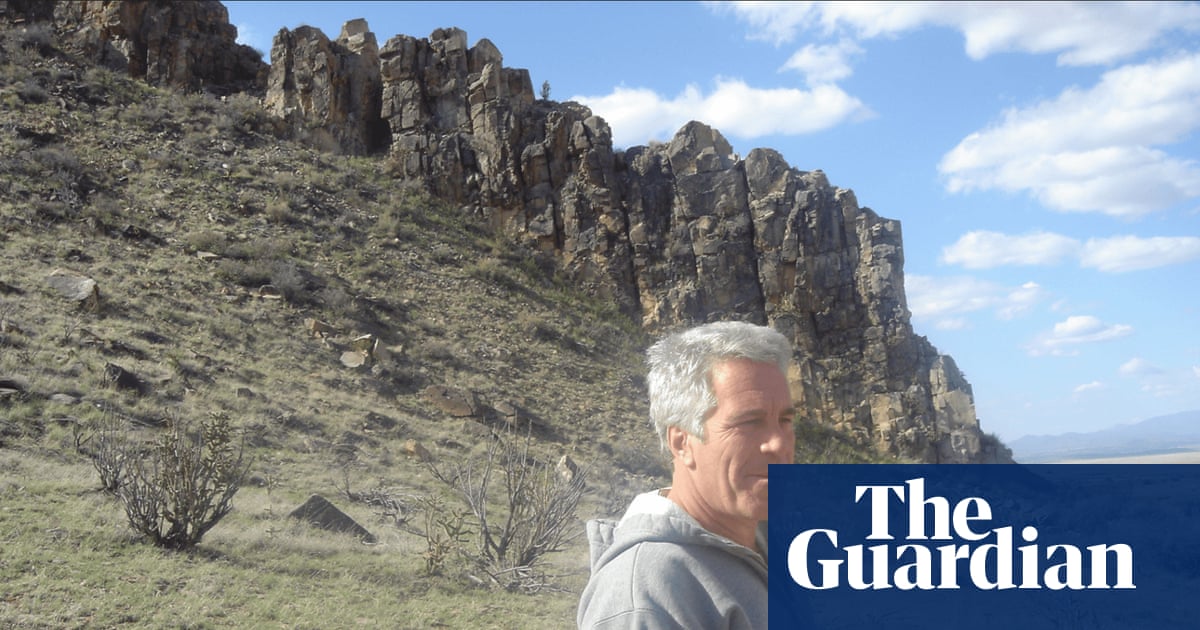
Federal authorities apparently never searched the property, but now state authorities will reopen a 2019 investigation
Sign up for the Breaking News US email to get newsletter alerts in your inbox
WhenJeffrey Epsteinwasarrestedon 6 July 2019 forsex traffickingteenagers, New York federal prosecutors said the ultra-wealthy predator “exploited and abused dozens of underage girls” in Manhattan and Palm Beach “among other locations”.
One of those other locations was the late financier’s sprawling New Mexico property. Epstein’s so-called Zorro Ranch came into sharper relief after his 10 August 2019 death in jail awaiting trial, with criminal and civil proceedings revealing that numerous alleged abuses unfolded there. But Zorro Ranch did not receive the same scrutiny as Epstein’s other properties: an 8 FebruaryGuardian investigationrevealed that federal authorities apparently never searched the property.
The US Department of Justice’s recent disclosure of some 3m investigative documents under Congress’s Epstein Files Transparency Act has renewed attention on Zorro Ranch. Now, officials in New Mexico are investigating Epstein’s activities there: the attorney generalannouncedthe state would reopen their 2019 investigation put on hold at federal prosecutors’ request, and state legislators established a “truth commission” to look into past activity at Epstein’s ranch.
But veteran attorneys contend that investigating Epstein’sNew Mexicoactivities nearly seven years after his arrest presents numerous logistical challenges. While the delay has all but certainly thwarted this important investigative avenue, the attorneys said, there are still multiple avenues authorities could pursue to try to get justice.
“A search warrant would have to be based on information that’s not stale. Somebody couldn’t come in and say: ‘Hey, seven years ago, something happened, and I just got around to telling you,’” said John Day, a New Mexico defense attorney and former prosecutor. “Now, it would have to be: ‘Well, we just uncovered something about a crime that occurred seven years ago that we didn’t know about until now.”
If authorities presented a judge with an adequate reason why information just surfaced, Day said, “then it’s very likely that they could get a search warrant if they can articulate facts about a crime, even if it’s an old crime, but it can’t be stale information”.
Even if a search did happen, the delay likely means “the value of anything that they can find would be minimal”, Day said. “You don’t know what has happened between the time Epstein was last there and the time the new people bought it, so that’s a problem.”
With the ranch potentially being fruitless as a source of evidence, Day said, authorities would likely start with “the human side” – finding ranch employees, contractors, “anybody local” who might have had some contact with Zorro. This could also include culling local news reports about parties held at Zorro to potentially yield more names, and examine entries in Epstein’s address book related to New Mexico – including women listed under “massage”.
Kate Mangels, a partner with firm Kinsella Holley Iser Kump Steinsapir, also noted that searching Zorro now would likely be a non-starter. “Certainly, the obvious answer is that it’s better to search closer in time,” Mangels said. “Particularly given that the property has changed hands, it’s unlikely that they would find any forensic evidence.”
That said, searching Zorro now could potentially bolster victims’ accounts.
“If the layout of the house hasn’t changed, and they’re saying: ‘I have a recollection of someone coming through the bathroom door on the left side of the room,’ and the search demonstrates that that’s where it is, it gives more credence to that testimony of that victim,” Mangels said.
While important, that might be the limit of Zorro’s utility at this point. If evidence were found, and led to a prosecution, defense attorneys will argue that it shouldn’t be included because of this delay.
“It may be hard to use those things other than maybe a structural description of the house,” Mangels said. “Those details are not evidence of a crime, but when you’re dealing with a victim’s testimony and there isn’t other evidence, any corroboration can be helpful to prove that.”