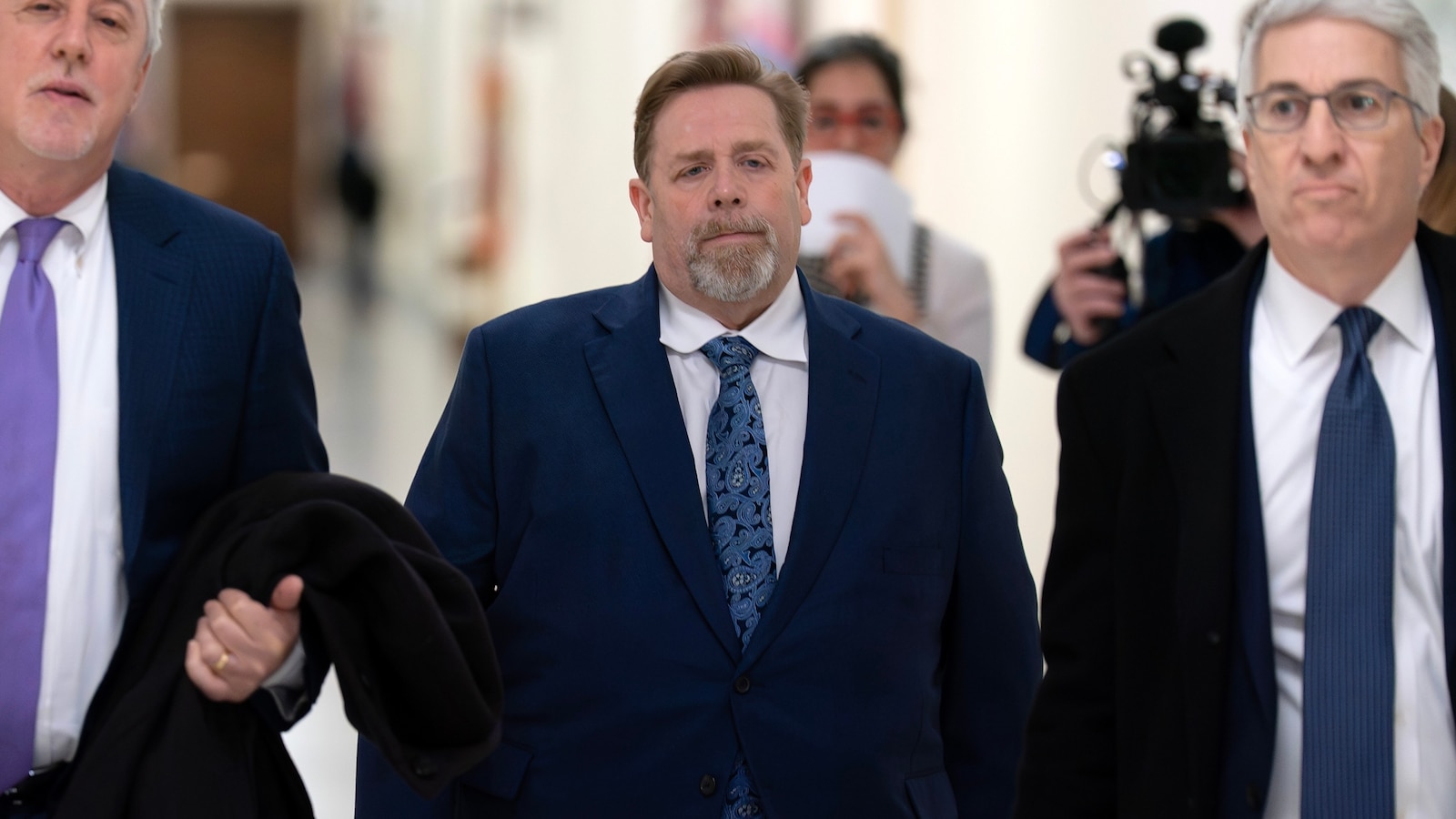
Lawyer Darren Indyke and accountant Richard Kahn provided new Epstein details.
The longtime attorney and one-time accountant of the late sex offenderJeffrey Epsteintold lawmakers earlier this month that they were never questioned by federal authorities about their work for the disgraced financier, according to deposition videos released Tuesday by the House Oversight Committee.
During their hourslong depositions over two days, attorney Darren Indyke and accountant Richard Kahn provided new details about their years of work for Epstein, raising questions about the lack of scrutiny they seemingly faced from federal prosecutors after investigations began into his crimes, and why both men continued to work for Epstein despite the allegations against him following Epstein's2008 plea dealon solicitation charges in state court.
"I drank the Kool‑Aid at the time. I think that's the answer, is I drank the Kool‑Aid at the time," Indyke told lawmakers when pressed about why he never quit working for Epstein.
Both men denied being aware of the scope of Epstein's crimes and described their relationship as strictly professional, though their decades-long work with Epstein make them some of the most knowledgeable people about Epstein's life and businesses. Indyke and Kahn serve as co-executors of Epstein's estate, were bequeathed by Epstein $50 and $25 million respectively, and managed Epstein's legal and financial affairs.
Following are the main takeaways from the depositions.
Both men sought to defend Epstein's finances, arguing that the web of holding companies and bank accounts used by Epstein were standard practice and that Epstein needed to operate in cash after his 2008 guilty plea limited his access to credit. They denied that they either knew of or facilitated payments to support his sex trafficking operation that included underage women and girls.
"It did not strike me as unusual that Mr. Epstein's business, household and personal needs required large amounts of cash on a regular basis. I never believed that the cash I withdrew from Mr. Epstein, and his staff, was used by Mr. Epstein, or his staff, for any improper purposes," Indyke said.
Indyke denied attempting to "structure" bank withdrawals to avoid triggering an alert to the Treasury Department, though he acknowledged that he regularly withdrew $7,500 at a time for Epstein, totaling more than $700,000.
"I did not believe that any amount of cash that I gave to the accounting department was going to be used for an improper purpose. I believed that there were legitimate reasons to bring that cash in and I did so," he said.
According to Kahn, Epstein's homes, employees, and other expenses cost between $25M and $30M annually.
"I used to prepare for Epstein a budget on one sheet of paper that included all of his entities, and I believe his annual upkeep for everything, not just his employees, for his homes, employees, planes, cars, gifts, and personal expenditures was somewhere in the $25 to $30 million range," Kahn said. "That includes the fuel for his planes, repairs and maintenance for his planes, if he does capital improvements on one of his properties, if he buys a car, if he gives a gift, if he hires a decorator. Everything."
Both men were pressed about why they continued working for Epstein despite his 2008 guilty plea and subsequent civil lawsuits against him. Indyke told lawmakers that he believed Epstein was "devastated and extremely contrite" about his crimes.
"When he was in jail and he looked devastated and told me he wasn't ever going to be in that position again and told me he didn't know that there were people that were underage and said this was never going to happen again, I believed him," said Indyke, who frequently visited Epstein in jail.
According to Indyke, he later became skeptical about some of the accusations against Epstein -- telling lawmakers he "drank the Kool‑Aid at the time" -- and did not believe Epstein would continue to commit crimes based on the increased scrutiny on him.