Victoria’s Secret and Abercrombie & Fitch taught a generation of young people what was desirable.
The 2000s saw what was perhaps the final generation of American mall teens, before the malls became laser arenas and windowless housing developments. The teens who inhabited them believed themselves to be sophisticated; they learned what a blowjob was in middle school from the Clinton-Lewinsky scandal. Their jeans were low and their thongs were high, their hair was ruthlessly flat-ironed, and their perfume smelled like vanilla frosting. They bought all their favorite things from just one man.
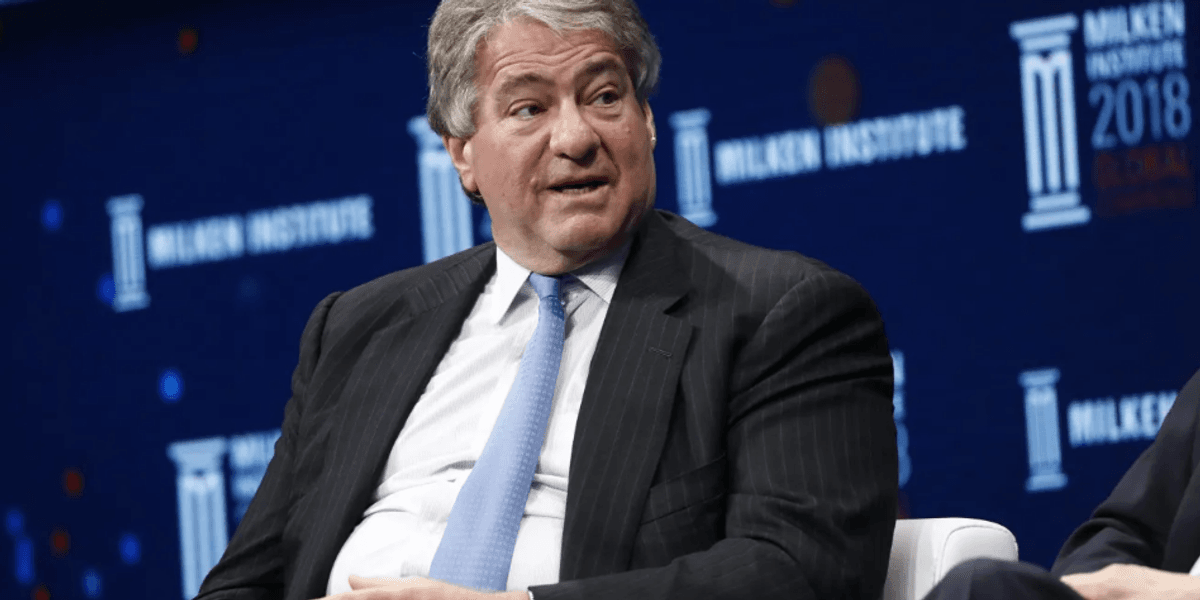
Les Wexner was the most influential mall tycoon of the late ’90s and early 2000s. As CEO of L Brands, Wexner oversaw The Limited and The Limited Too, Bath & Body Works, Express, and — most crucially for millennial teens — Victoria’s Secret and Abercrombie & Fitch. Wexner’s brands defined what it meant to be a cool young person in that era, and did it so successfully that Wexner became very, very rich on the backs of his devoted adolescent customer base. The defining aesthetic of a generation was the result of his vision.
All of which gets a little concerning when you consider just how many men who worked for and with Wexner have been accused of sexual misconduct involving very young people — starting with Jeffrey Epstein.
Wexner started The Limited in 1963with a $5,000 loan from his aunt, and by the 1990s, he had transformed his single store into the flagship of a multimillion-dollar conglomerate. Around the same time, he took on Epstein as his money manager. For many years after that, he would be Epstein’s only public client.
There’s little evidence to suggest that Wexner participated in Epstein’s crimes, but their intimacy has long been suggestive and confusing. The two were close enough thatWexner gave Epstein extraordinary amounts of control over his personal fortune, including power of attorney.
Wexner has never been charged in connection to Epstein.A 2019 FBI memolists Wexner as a potential Epstein co-conspirator and notes that a subpoena had been served, but allowed that “there is limited evidence regarding his involvement.” In February,Wexner testified before Congressthat he knew nothing of Epstein’s abuse of girls and young women.
Regardless, Wexner appears to have known thatEpstein traded on his connection to Victoria’s Secret to target and assault aspiring modelsin 1997. While we don’t know what Wexner did in response to this news, their relationship appears to have withstood it.
They eventually had afalling out related to Epstein’s 2007 solicitation charges, which led Wexner to discover that Epstein had misappropriated family funds. According to reporting from the New York Times, “instead of reporting the theft to the authorities or bringing legal action against Mr. Epstein, they opted for a private settlement. In early 2008, Mr. Epstein returned $100 million to the Wexners.” The Epstein files contain an unsent and undated letter from Epstein to Wexner in which Epstein writes, “You and I had ‘gang stuff’ for over 15 years,” and adds that he has “no intention of divulging any confidence of ours.”
It appears that Epstein wasn’t the only bad actor surrounding Wexner. Ed Razek, former chief marketing officer at L Brands and a close friend of Wexner’s, has beenaccused of nonconsensually groping Victoria’s Secret modelsand blackballing those who refused his advances. Mike Jeffries, the former CEO of Abercrombie & Fitch, isawaiting trial on sex trafficking and prostitution charges, having allegedly targeted young men who modeled for Abercrombie, worked as the stores’ infamous shirtless greeters, or aspired to do any of the above. Bruce Weber, a photographer who shot many of Abercrombie’s famously edgy ads, has beenaccused of sexually exploiting male models.
Wexner’s persistent presence in the Epstein story is often overlooked, as he’s not a household name in the way that President Donald Trump, Bill Clinton, and Bill Gates are. Still, Wexner’s influence is undeniable because his companies were so central to the prevailing aesthetic and ethos of the 2000s. When I was a teenager in those years, every girl I knew got her first bra at Victoria’s Secret, and most of my classmates either wore or aspired to wear Abercrombie’s jokey graphic T-shirts. The companies that made up L Brands were as fundamental to the experience of being a millennial adolescent as speculating over the state of Britney Spears’s virginity was.
Wexner’s brands were not neutral purveyors of clothing. They defined culture and were architects of what was cool, which is to say they provided teens, tweens, and young adults with an ideology of what is acceptable and desirable, and what is not.
At L Brands mall stores, being cool meant being thin (neitherVictoria’s SecretnorAbercrombiewas what we would today call “size inclusive”). It also meant being white.Abercrombie infamously refused to hire people of colorto work the sales floor and soldnumerous racist T-shirts, while Victoria’s Secret dressed white models as “sexy little geishas” andBlack models in jungle-themed lingerie.
Perhaps most importantly, though, at L Brands stores, what was cool was what was raunchy. The late 1990s and early 2000s were a sexualized and then pornified era, and perhaps nowhere was this grim, compulsory sleaze as evident as it was at the mall.
In her2025 bookGirl on Girl,the journalist Sophie Gilbert describes Abercrombie’s trendy, envelope-pushing raunch circa 1999. As Gilbert writes: