Is it okay to take money from bad people if it goes to a good cause?
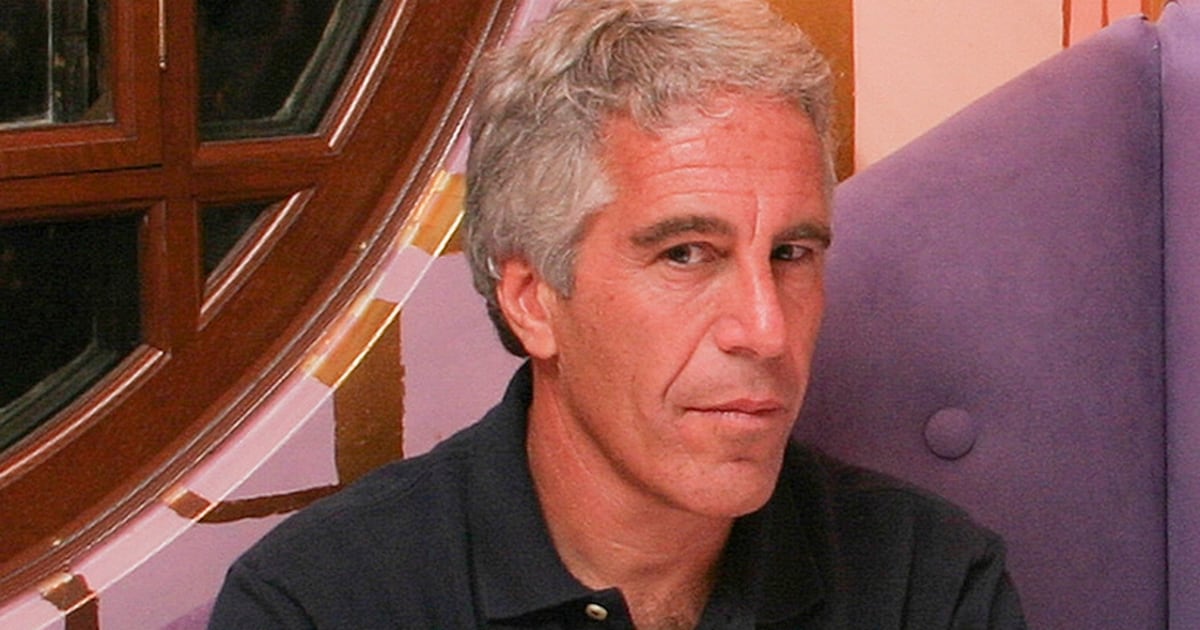
Not everybody acquiesced when Jeffrey Epstein came bearing gifts.
Harvard Universitybarred Epstein’s donationsafter he pleaded guilty to solicitation of a minor in 2008, a development that frustrated his friends on the faculty, according to an internal review. One physicist, a woman whom Epstein had bragged about and racially misprofiled inan interview thatSciencepublished after his death, had pointedly refused a donation just months before his second arrest in 2019. “Would I be interested in receiving funding from a wealthy man who had also been convicted of a sex offense?” she toldScience. The answer was no.
But others, many others, said yes when Epstein came calling. Among them: thePalm Beach Ballet, theMelanoma Research Alliance, theUJA-Federation of New York, andMIT Media Lab. Bill Gates once legitimized such giving, evangelizing to other would-be billionaire philanthropistsover brunch at the convicted sex criminal’s mansion. Gates has sincerepeatedly apologizedfor his dealings with Epstein, but the multi-billionaire’s foundation hasauthorized an external reviewexamining Gates’s ties and assessing their philanthropic vetting policies.
In recent years, theEpstein fileshave triggered mass public dismay over the idea that a sex criminal could buy — or, in these cases, donate — his way into elite circles. And yet today, over a decade after most of these checks were cashed, not much has changed about how organizations behave when bad people try to give to good causes. By using his giving to ingratiate himself with the rich and famous, Epstein may have embodied philanthropy at its absolute worst, most craven, and self-serving. But he was far from the only wealthy person wielding donations to win powerful friends, or to weasel his way into the public’s good graces.
“Many organizations will say they know their donors, especially the large ones,” said H. Art Taylor, president of the Association of Fundraising Professionals (AFP), the largest network of its kind in the country. “But do we really?”
Obviously, very few people, elite donors included, have committed crimes as vile as Epstein’s. And yet, a2023 study found that a full half of fundraisershave encountered a donor who falls along a spectrum of unsavory behavior, be it a board member with a sleazy reputation or an environmental philanthropist who has made their money in the oil industry.
Every time such a donor gives, it sparks a difficult trade-off. Is it okay to accept money from a bad person if it goes to something good? There is, after all,not enough philanthropyon offer to go around as is. But if fundraisers inevitably tread into the gray areas, where should they draw the line?
Thejustificationsof the scientists, charities, and academics who accepted Epstein’s donations clearly do not pass the sniff test. Their knee-jerk response should’ve always been a categorical no, something nearly everyone who accepted Epstein’s money now admits.
Epstein demonstrates just how bad the worst-case scenario can be for charities and universities that take money from the wrong person. MIT Media Lab’s association with Epstein ultimately led to anavalanche of bad press,resignations from key researchers, and a permanent reputational stain. Gates could’ve spent this year basking in the warm glow of hisfoundation’s historic decisionto donate itself out of existence, the crowning jewel of his philanthropic legacy. Instead, he will spend itapologizing to his staff,testifying to Congress, and yearning forthe one that got away, his ex-wife, Melinda French Gates, who reportedly left him in partover his Epstein ties.
But bad donors can still harm good organizations even when they are not as obviously bad as Epstein proved to be. Research shows that organizations that accept toxic donations, even from less catastrophically scandalous philanthropists, oftenstruggle to build trustwith new donors in the long run, because they come to be seen as morally complicit. What might feel like a justifiable trade-off in the short-term — a dollar from a bad person is still a dollar for a good cause — can quickly devolve into a long-term liability.
Many people who took Epstein’s money laterpleaded ignoranceof his crimes, despite his being an unusually clear case of a rotten donor. Sure, he paid a small army of digital advisers to clean up his image a smidge, but his 2008 arrest was still eminently Googleable.
But not every shady donor is so easy to spot. Instead, said Patricia Illingworth, a professor of philanthropy and ethics at Northeastern University and author ofGiving Now: Accelerating Human Rights for All, the majority “are problematic mainly because of how they made their money” or because they’ve engaged in behavior that is morally dubious, but not outright criminal.
Think of the Sackler family, who made theirfortune on the highly addictive painkiller OxyContinand went on tobecome major donorsto the Metropolitan Museum of Art, the Guggenheim, and the University of Oxford, among other arts and cultural institutions. There’s alsoWarren Kanders, who was forced to step down from the Whitney Museum’s board in 2019 in response to public outrage over his company’s sale of tear gas.
Illingworth believes that such people opt to give for two main non-altruistic reasons. One is reputation laundering, which has a long history in philanthropy. In 1888, Alfred Nobel read apremature obituarycalling him the “Merchant of Death” for getting rich off the sale of explosives. Nobel was so spooked by the moniker that he decided to give away all of his assets to establish the Nobel Prizes. Today, the name Nobel is more broadly associated with peace and science rather than blowing stuff up. Everyone prefers to be known for their gifts to charity, not for accelerating deforestation or covering up workplace abuse.