London isn’t the only European city named in the Epstein files; the popular Spanish tourist destination also appears. Locals say it comes as no surprise, pointing to a thriving underworld where money and connections open every door, writesAnna Hart
Removed from bookmarks
Among the many revelations in the Epstein files were the close links that an American financier and childsex offender had with not just London, but also the city ofBarcelona. The Catalan capital may have been ahub for Epstein’s activities, as it is mentioned by Daniel Siad, a close associate of Epstein who sent photos, profiles, and travel updates of young women to Epstein, facilitating introductions under the guise of “model casting”.
Both Epstein and Siad were active in central Barcelona from 2017 onwards. In the files, Siad stated thatBarcelona made a good base for recruitment, “much safer than Paris”, owing to the decriminalisation ofsex work, and thanks to the large influx of tourists and relative anonymity. Siad himself has previously denied any wrongdoing and maintained that he only interacted with Epstein to carry out legitimate modelling business. Epstein however visited the city on many occasions after 2009, staying at the W Hotel on the waterfront, drinking at Soho House, dining on the roof terrace at the Hotel Ohla. In 2011, he wrote to a friend, “I’m in Dubai and I can still hear Barcelona’s gasps.”
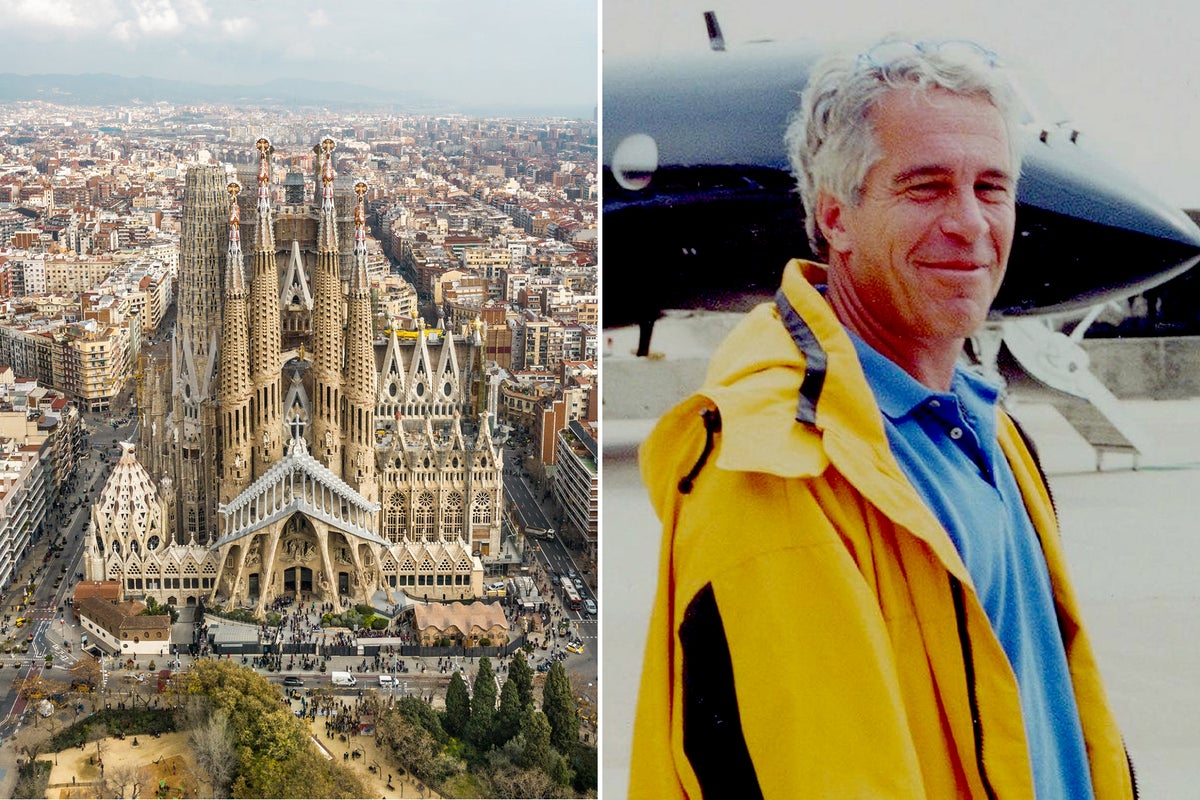
To some residents and the millions oftourists who flock to Barcelonafor the architecture of Antoni Gaudí, the Mediterranean coastline and the restaurant and bar scene, Barcelona’s role in Epstein’s exploitative and criminal network has come as a shock. But to those who work closely with marginalised communities, the news came as no surprise. And it has reignited fierce debate about the city’s sex trade, the prevalence of trafficking, and how overtourism has contributed to the city’s darker reputation as “the Miami of the Med”, where anything can be acquired with cash and connections.
As a port city, Barcelona is positioned at the European crossroads and this is reflected in its international and inclusive spirit. A gateway to the Mediterranean and the Iberian peninsula, in the 20th century, migrant workers from Andalusia came for jobs in the port and manufacturing, while arrivals from Latin America and other nations in the global south kept the city evolving.
Today, around 25 per cent of Barcelona’s population is foreign-born. But while the city, like London, enjoys its international reputation as an open location full of opportunity, what is less well documented is how tourism and migration intersect with a booming sex trade. It’s this which has been exposed in the Epstein files, with hundreds of messages and emails between the sex trafficker and young women and girls who were studying or hoping to break into the modelling industry.
Young women from all over the world are brought to the Spanish capital, but particularly fromEastern Europeannations like Latvia, Russia, Belarus, Czechia and Ukraine. For these young women, Barcelona offered opportunity, glamour, and a potential career in fashion. But if the Spanish European city became a safe haven for their abusers, it certainly wasn’t and isn’t for their victims.
Spainis now the third-largest market for prostitution in the world, behind Thailand and Puerto Rico. In 2014, Spain’s National Statistics Institute attempted to put a figure on the amount that the sex trade and illegal drugs contribute to the GDP, eventually citing €11m (£9.5m); a 2016 UN study estimated the Spanish sex trade at €3.7bn.
Reliable numbers are difficult to find, but everyone agrees that since Barcelona’s transformative 1992 Olympics regeneration project, mass tourism and confusing municipal regulations have created a situation that became ripe for the exploitation of women.
Technically, Spain decriminalised sex work in 1995. Initially, this was considered a progressive and positive move, supported by humanitarian organisations, academics and sex workers’ unions. As post-Olympics Barcelona honed its reputation as a glamorous, hard-partying, beach-blessed international tourism destination, this however, shaped the face of sex tourism.
Initiatives to “clean up” the city centre for tourists started to force sex workers into less safe areas. Punitive local regulations – stemming from a hardline “abolitionist” stance – placed adult, consensual sex work into a legal “grey area”. Many sex workers were left more open to exploitation and marginalisation.
The country's confusing prostitution laws mean that running a brothel is neither fully legal nor fully illegal. At the moment, it is illegal only to live directly off prostituting other people, something brothel-owners can get around by obtaining hospitality licenses. Irene Adán, general secretary forSindicato Otras, a Spanish sex workers’ union, says: “Municipal policies are often justified as measures of ‘coexistence’ or ‘security’, but in cities like Madrid and Barcelona, the underlying reason is to protect the urban image in areas with high tourist traffic. Prostitution is only tolerated as long as it is not visible.”
This has resulted in a shift to indoor spaces under the control of third parties, such as clubs and apartments, fit with hospitality licenses. These activities being hidden from view has resulted in greater insecurity for sex workers, and more dangerous clandestine activity. “When the work is pushed into poorly lit industrial parks or peripheral highways or into the hands of intermediaries, the risk increases”, says Adán.
Angeli Martinez* is asex workerwho has been living in Barcelona for eight years, having emigrated from Medellín in Colombia. “Technically, my work is legal, but the attitude of the police and local authorities emboldens men who come here seeking sex, while disempowering workers like myself,” she says.