The philanthropist always saw Epstein for who he really was – despite his meetings with her then husband Bill Gates. Now carving out a life on her own terms, she explains why she’s focused on the fight for women’s health
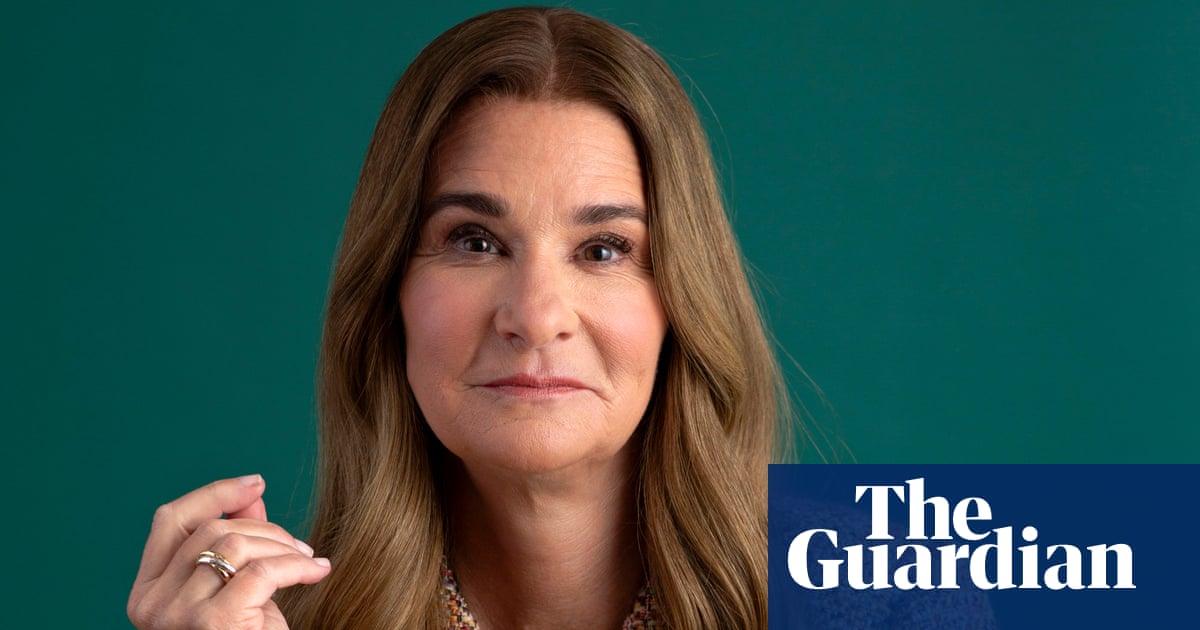
Melinda French Gates has entered a new phase of life, and it is “beautiful”, she says. It is five years since her painful, public divorce from the Microsoft founder Bill Gates, and two years since she stepped down from their charity, the Gates Foundation, to focus her full attention on Pivotal, the philanthropic organisation she founded in 2015 to promote women’s empowerment. Her three children have all left home, she goes by “Nonna” to her two granddaughters, and as an empty nester she finds herself in the strange position of having time on her hands.
She has started visiting her local independent bookshop more often, chatting to the staff about what she should read next; when she finishes work at five, she often texts a friend to meet for a walk, and they go exploring new neighbourhoods of Seattle, decaf coffees in hand. She no longer runs daily but insists on a morning stroll to enjoy the natural beauty of her adoptive home town, Lake Washington glittering in late-spring light. This morning, she saw a blue heron, she says, sounding almost boastful.
These seem remarkably modest hobbies for a woman with an estimated net worth of $30bn. When I point this out, she explains how a few years ago she read a quote about how “sometimes we go out in the world for discovery and to learn new things, but sometimes you just need to keep walking the path near you. Walk it over and over again, and you’ll start to see things.” After many years of frenetic international travel with the Gates Foundation, she is choosing the latter.
Her newfound free time is relative, given that Pivotal, where French Gates works full-time, is one of the largest private foundations in the US. It has already pledged $2bn towards projects supporting women and their families, and received $12.5bn from Bill Gates in 2024 as part of their settlement agreement. We meet at Pivotal’s stylish, lakeside offices, all natural wood finishes and large windows overlooking the water. French Gates is 61 years old and extremely polished, with sleek brunette waves and a golden tan, and if she has had cosmetic work done it is subtle – noMar-a-Lago lipshere. The billionaire financier Warren Buffett, a close friend of the Gateses,once saidthat Bill is “smart as hell, obviously”, but French Gates is “smarter”. She is warm and personable and yet it strikes me, as we talk about the roll back of women’s rights in the US, billionaires behaving badly and her ex-husband’s involvement with the sex offender Jeffrey Epstein, that she must have a core of steel.
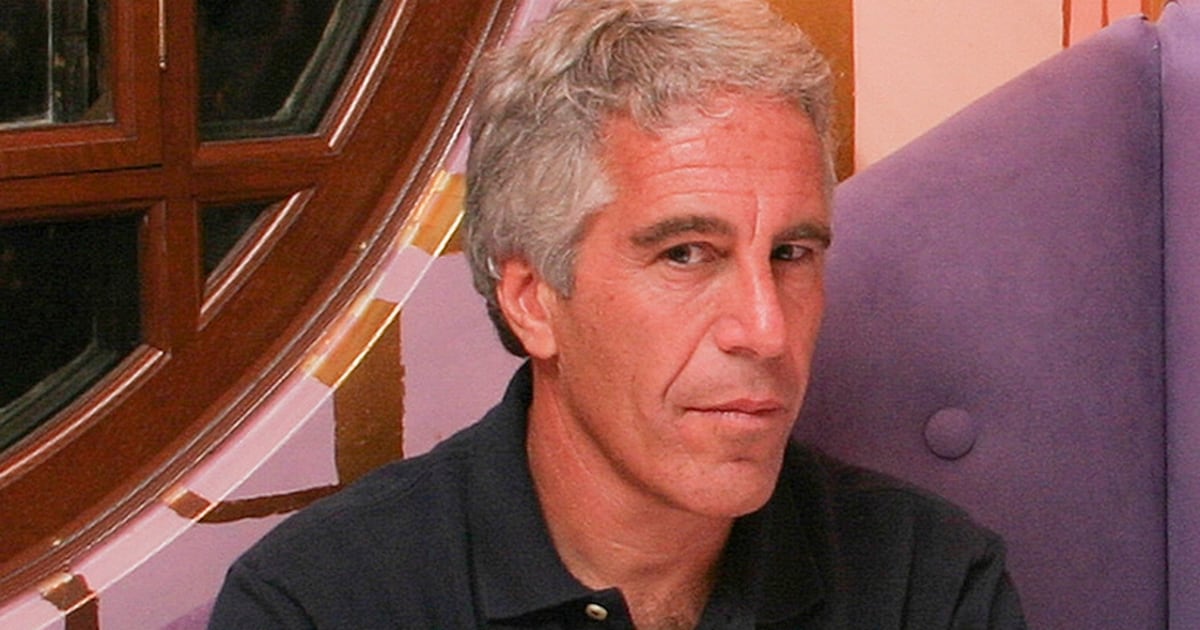
French Gates has said that many things contributed to her decision to divorce Bill in 2021 after 27 years of marriage, among them thathe was unfaithful to herand that he maintained contact with Epstein, despite her objections. Then, in January this year, the US justice departmentreleased a tranche of Epstein emails. They included messages drafted by Epstein alleging that Bill Gates had contracted an STI after having extramarital sex with “Russian girls” and was planning to surreptitiously give French Gates antibiotics. Gates denies these claims,telling Australian channel 9News: “Apparently, Jeffrey wrote an email to himself. That email was never sent. The email is false … Was he trying to attack me in some way?” He also addressed staff at a Gates Foundation town hall meetingto take responsibility for his actions, the company said, telling staff he saw and did “nothing illicit”. Gates noted of his ex-wife: “To give her credit, she was always kind of sceptical about the Epstein thing.”
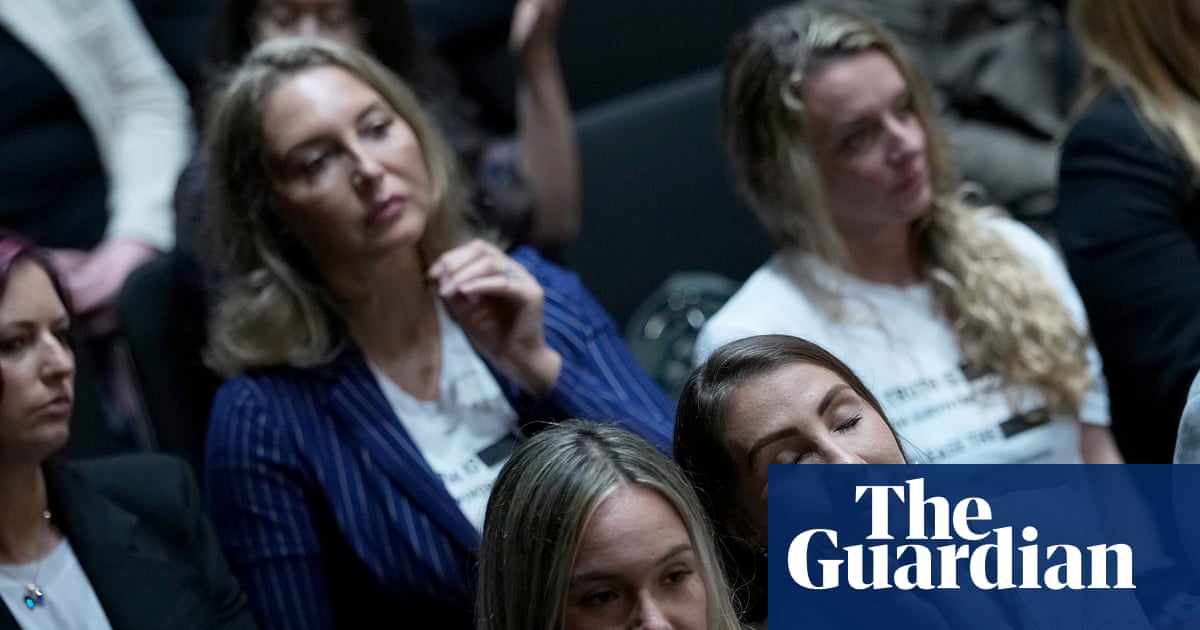
In aninterview with NPRsoon after the files were released, French Gates said she was happy to be away from “all the muck” and that the men involved, including her ex-husband, had to answer for their actions. Why did she decide to speak out then, I ask. “Well, I had not been silent. I had been asked before what I thought of Epstein, and I had spoken my truth about what I had experienced. He was an abhorrent human being, a horrid man, and so in these situations – this is a hard topic for me, you need to know that – my heart goes out to the young girls,” she says. “I just spoke the truth, which is they deserve some peace, and they deserve some justice.”
Does she feel frustrated that while many women, including Epstein’s victims, have shown great courage in speaking out, Epstein’s male associates are choosing to stay silent? “What I know is that bad things happen in darkness. We need to have more transparency,” she replies. French Gates understands better than most the secretive, ultra-rich world that Epstein moved in, and I wonder why she thinks he was able to get away with his crimes for so long. “The justice system didn’t do its job. It did not do its job. Full stop. This could have been stopped. And so again, I think that’s why, finally, we are having a reckoning in society. If we don’t want children to be harmed, the justice system has to work.” But I ask, the scepticism surely sounding in my voice, are we truly having a reckoning? “I think that would be a better question to ask the survivors,” she replies.
French Gates has said she met Epstein once and found him so repugnant that she had nightmares afterwards. I ask what had so chilled her. Her demeanour changes rapidly. She looks as if she is about to cry. It is upsetting to witness a woman of such unusual self-possession suddenly lose her poise. She turns away, to look at the lake outside her window, and I can see her attempt to compose herself. “My heart is racing,” she says after a moment, fluttering her hand over her chest. “Have you ever in your life been around somebody that you just know is evil?” she asks a moment later. “There you go. You just have your answer. We need to listen to our feelings about people.” When she said her heart was racing, was she reliving the gut reaction she had on meeting him? “I’m done. I can’t do any more questions,” she says. I am watching French Gates, trying to read her reaction, but can sense to my right her comms person, who is listening in, tense and ready herself to end the interview if I push things too far. Then she answers. “Yes. Any woman who has ever been around somebody who is evil or had an experience and then if you’re around somebody else who is evil. Just no, no.” I notice that while she usually speaks in full sentences, her grammar has broken down. I’m sorry, I say, I can see you’re having a strong – “Visceral reaction, yes,” she interrupts.
French Gates has said that in the months leading up to her divorce, she started experiencing panic attacks, and it is clear her emotional response to my questions is real. We move on from talking about her personal experiences to the wider politics, and she becomes her usual self again. She is clear about how society can best fight modern misogyny, in all its forms. “We have to put women, far more women, in positions of power. It’s why I do the work that I do,” she says. “When women step into their full power, we have a different lens on society. We are the bedrock of society. We are the bedrock of the family.”
This month, French Gates is committing $215m in new funding towards women’s health care, split between initiatives supporting reproductive health and health in midlife, including through menopause. “I’ve always believed if you don’t start with good health, it’s pretty hard to live up to whatever it is you want to do in your life,” she says. Research shows that women experience higher rates of disability and illness than men, but for every dollar spent globally on medical research and innovation, just 5 cents goes to women’s health. “We have under-prioritised women for so long,” she says. For a long time, the medical and scientific community has treated the male body as the default, which means we know little about problems that disproportionately affect women, such as autoimmune disease, and although half the population goes through menopause, there is a dearth of research into how best to support women through this transition.
“It’s like this time in a woman’s life is literally invisible to the world,” French Gates observes. Women spend an average of nine years in poor health, and French Gates had, like many, assumed these years were in later life. “But no, half of this is in the perimenopause, menopause phase, and we’re starting to hear of women dropping out of the workforce because of it,” she says. She recalls how surprising it was to her and her friends when, in their early 40s, they began to experience perimenopausal symptoms. These tend to strike when many women are hitting the peak of their careers and trying to juggle caring for young children and ageing parents; many suffer pain and poor health in silence.
French Gates has been providing funding for reproductive healthcare for decades, having learned on field trips to Africa and south-east Asia the critical difference that family planning can make. “I’ve seen babies die because the women couldn’t space the births, and they were born too quickly,” she says. In the wake of the overturn ofRoe v Wade, much of Pivotal’s work is focused on maternal mortality, perinatal mental health and reproductive rights in the US. She has found it “devastating” to witness the dismantling of US abortion rights. “My granddaughters are growing up with fewer rights than I had,” she says. “I don’t think women’s health should be a political issue. I think women should decide if and when to have a child, and those decisions are best made in the privacy of our lives, not by our government. It’s something we have to keep fighting against.” As a Catholic, French Gates once grappled with how to reconcile her faith with what she was learning about the importance of reproductive freedom. True to form, she did her homework, even inviting scholars from the University of Notre Dame, a Catholic research university in Indiana,to teach her about the history of the church’s position. Now, she is unequivocal in her belief that a woman’s right to abortion should be legally enshrined. “Only we own our bodies,” she tells me.
In French Gates’s telling, she has always tried to remain true to her Catholic, middle-class upbringing in Dallas. Her father worked as an aerospace engineer and was involved in the Apollo programme; her mother was a homemaker. Her parents instilled in their four children a strong sense of public responsibility. “We were often volunteering, often putting money in the church basket,” she recalls. She studied computer sciences and earned an MBA at Duke University before joiningMicrosoftin 1987, where she rose quickly up the ranks, leading teams developing products including Microsoft Word, Microsoft Publisher and Expedia. She met Bill at work, and they married in 1994.
Shortly before the birth of their first child, French Gates left Microsoft to focus on her family and their philanthropic work. A commitment to giving back was something she and Bill shared. “My ex-husband, his parents were incredibly philanthropic, so I think that was sort of in both of our DNA growing up, and it just felt like the right thing to do,” she says. They were also inspired by their friend and fellow philanthropist Warren Buffett, who was a major donor to the Gates Foundation. “Once we started down that path, I’ll say for myself, it fed on itself.” Over the past 25 years, the Gates Foundation has given away more than $100bn to anti-poverty initiatives, vaccine research and fighting malaria, HIV, tuberculosis and other infectious diseases.