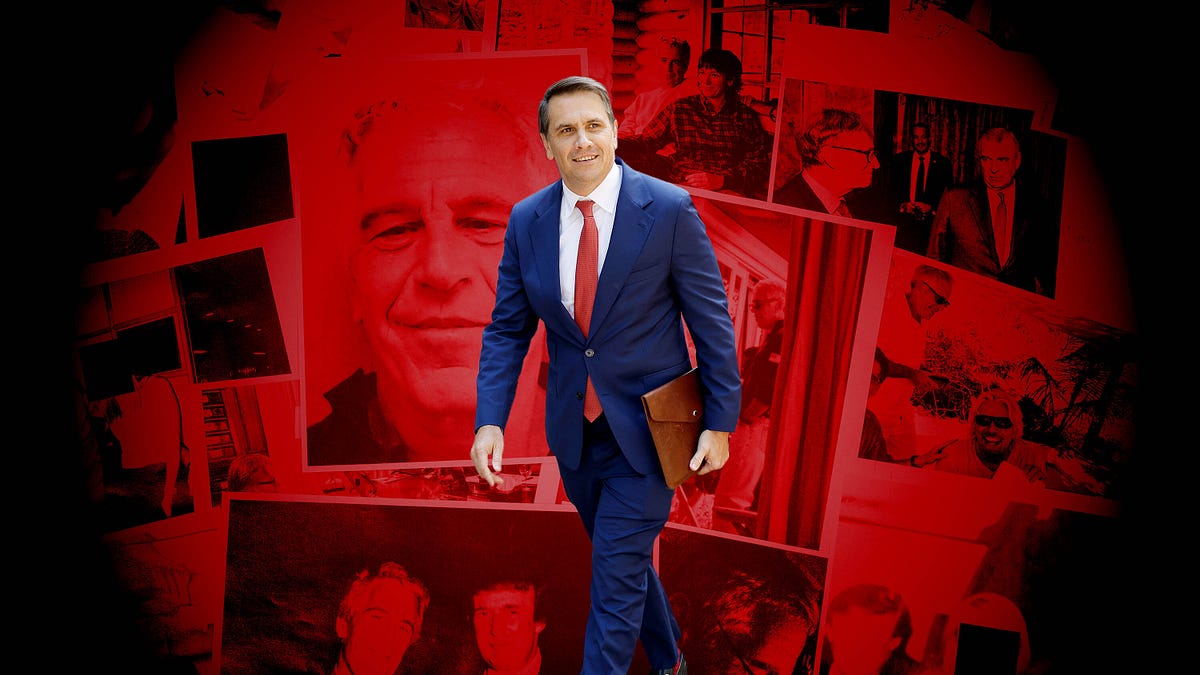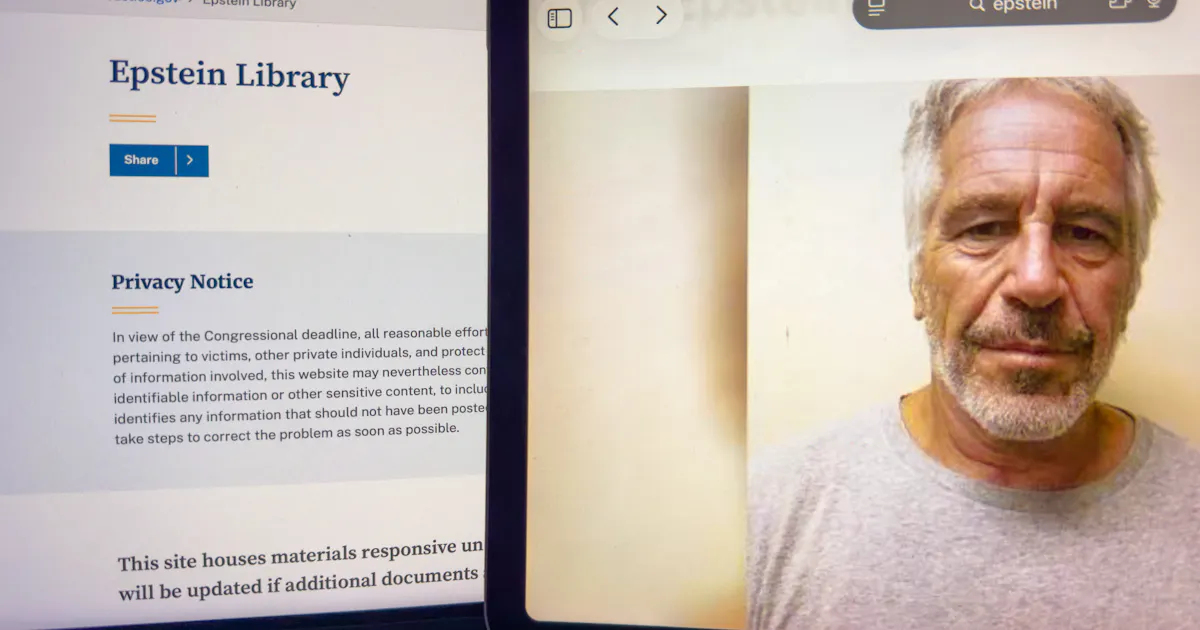
Last spring, it was rumored that agents with the FBI were trained to redact portions of the Epstein files before the documents became public. On Sunday, agency officials admitted to the scheme.
It took independent journalist and award-winning podcasterAllison Gilla year, a Freedom of Information Act request, and a subsequent lawsuit against the government to obtain evidence that the bureau had specifically trained its investigators to scrub the Epstein files clean. On Sunday, Gill received a stunning admission from the FBI confirming that the training videos—which were never released as part of the legal mandate—do in fact exist.
Numerous federal agents from both the FBI and the Justice Department have shared their experiences of participating in the censorship effort, recounting how they would sometimes be locked in the building for 24- or 48-hour shifts to review hundreds of thousands of files, videos, and photos related to Jeffrey Epstein’s child sex-trafficking ring. One of the things agents were reportedly instructed to redact was mentions of Donald Trump’s name.
“They confided in me that there existed an unclassified share point site where a Powerpoint deck lived, and that the Powerpoint deck had training videos embedded in it, instructing them on how to find and log and mark Trump’s name and other information for redaction,” Gill said in a video report.
The bureau’s information management division was predominantly tasked with censoring the documents, despite the fact that the unit has not historically been used to scrub documents for publication. So the FBI had to create specialized training videos for the agents, instructing them how to “use an Excel spreadsheet to log Trump’s name, the page number, and the document,” reported Gill.
Even still, Trump wasmentionedmore than 38,000 times in the initial release of the Epstein files. His name also appeared in anFBI tip sheetlisting abuse allegations, including one in which an unknown source accuses Trump of forcing one of Epstein’s victims, presumed to be 13 or 14 years old at the time, to perform oral sex on him “approximately 35 years ago” in New Jersey.
In a Sunday talk show appearance, President Donald Trump used thedeathof Senator Lindsey Graham the day prior as a get-out-of-answering-questions-free card.
The weekend saw the unexpected death of the Republican senator at age 71. It also saw the United States and Iran trade fire in the Middle East, reaffirming the apparent collapse of the June memorandum of understanding between the two countries.
When CNN’sState of the Unionhost Jake TapperqueriedTrump about the latter development, the president used the former as an excuse not to answer.
“Are we back at war, and who controls the Strait of the Hormuz?” Tapper asked.
Before he had even finished the question, the president was dodging it: “Well I don’t want to—out of respect for Lindsey, I’m not talking about that. We hit ’em very hard last night, so I don’t want to talk about it, but I will say we hit ’em very hard last night.”
The president went on to allege that Iran’s leaders had been “giving up everything” during talks on Saturday before they turned on a dime, hitting “a ship with a drone.” Such rhetoric is consistent with Trump’s past attempts to portray Iran, despite the evidence to the contrary, as desperate and on the verge of surrender.
“These people, there’s something wrong with them,” Trump said of Iran, “but I’m talking about a man who had nothing wrong with him, and that’s Lindsey Graham.”
Later in the interview, Tappertried againto get information about the war out of Trump, asking if the Strait of Hormuz is closed as Iran has claimed. But his luck was no better this time, with the president responding, “It’s open as far as we’re concerned. Don’t talk about it. Talk about the reason that you asked me to speak.”
Come Monday morning, Iran and the U.S. were bothclaiming to be in controlof the strait.